The right auto glass shop can save you money, time, and headaches. The wrong one can cost you a deductible, a wasted workday, and a windshield that creaks at highway speed. I’ve managed fleet repairs in Guilford County and sat on the customer side more times than I can count. There’s a pattern to shops that deliver clean work, and another to the ones that leave you with wind noise and loose trim. If you’re near 27407, you’ve got options. The trick is filtering for quality without spending a week becoming a glass expert.
This guide walks you through what to ask, what to look for on the estimate, how to read between the lines on scheduling promises, and how to leverage your ZIP for better quotes. You’ll see where top shops earn their keep, what a professional install looks like, and when you should push for OEM glass versus high‑quality aftermarket. I’ll also point out pitfalls that show up in 27401 through 27499, not because ZIP codes change the physics of urethane, but because coverage networks, mobile routes, and warehouse supply absolutely change the experience.
What “delivers” really means for auto glass
A good price doesn’t mean much if the glass fogs your sensors or leaks in the first thunderstorm. When I say a shop delivers, I mean three things. The right glass with the right components, a technician who follows adhesive cure times and calibration specs, and a process that respects your time.
On a modern vehicle, the windshield is a structural part of the safety system. The adhesive bond helps keep the roof from collapsing in a rollover and controls how airbags deploy. If you have ADAS features like lane keep or automatic emergency braking, the forward camera often looks through the glass. Get the wrong windshield or skip calibration and the system can misread the world by inches, which matters at 60 mph. A solid shop around 27407 treats glass work like safety work, not a commodity swap.
Reading the quote like a pro
A strong estimate has specifics, not just a price. It lists glass type, moldings, sensors, recalibration if needed, mobile service fees if any, taxes, and a warranty. If a shop near Gate City Boulevard tosses out a round number without details, expect add‑ons later.
The glass type should match your build. If your car offers acoustic interlayer, solar control, humidity sensor, rain sensor, heads‑up display, or a heated wiper park area, that needs to be on the ticket. A shop worth your money will ask for your VIN to decode options. That’s how you avoid the common trap where the tech shows up with the cheap variant, then either forces it to fit or reschedules you. A detailed auto glass quote, whether you’re calling from 27407 or adjacent ZIPs like 27410 or 27455, keeps everyone honest.
Here’s what a typical clean estimate includes for a late‑model crossover:
- Windshield part number and brand, with notes like “acoustic, solar, lane camera” New molding or reveal trim if the OE design requires replacement Urethane brand and cure time, often 1 to 2 hours for safe drive‑away ADAS calibration, static or dynamic, and whether they perform it in‑house Labor breakdown and mobile service notes, including any after‑hours premium
If the shop is quoting a vehicle in 27401, 27403, or 27406, they might have different glass warehouse access and lead times than in 27407. That shouldn’t change price transparency, only scheduling.
OEM, OEE, and the aftermarket reality
People love to argue OEM versus aftermarket. I’ve seen excellent OEE (original equipment equivalent) glass and lousy OEM runs, but generally, OEM offers the tightest match on fit, optical distortion, frit band, and camera clarity. OEE from top manufacturers can be 90 to 98 percent of the OEM experience at a lower cost. No‑name aftermarket sometimes brings a wavy look at the edges or misaligned camera brackets. That’s not worth the savings if you rely on lane centering.
For vehicles with sensitive ADAS cameras, HUD, or laminated acoustic interlayers, I lean toward OEM when insurance supports it. On vehicles without camera systems, solid OEE from a brand the shop stands behind is a fair play. Ask the shop which brands they stock and, more importantly, which they avoid. A tech who tells you why they won’t install a certain aftermarket windshield is doing you a favor.
Calibration is not optional
If your windshield hosts a camera or radar, replacing it usually requires calibration. There are two main flavors. Static calibration uses targets in a controlled environment. Dynamic uses a scan tool and a specific drive cycle on marked roads at set speeds. Some cars need both. Around 27407, not every mobile unit can run a proper static calibration. That’s fine if your car supports dynamic only. It’s a problem if your make requires both or the camera needs a controlled setup.
Ask the shop where and how they calibrate, and what documentation they provide. A reputable operation prints or emails the before‑and‑after calibration report with pass codes. If someone tells you your car will self‑calibrate magically with no steps, that’s your cue to dig deeper. The better shops across 27407, 27410, and 27409 have either invested in in‑house targets and scan tools or partner with a calibration center nearby. Either works if the chain of custody and proof are crystal clear.
When mobile service helps and when to visit the shop
Mobile glass service is one of the great conveniences in this trade, especially for straightforward replacements on vehicles without static calibration needs. A tech can knock out a windshield or door glass in your driveway. You save a trip. But mobile work introduces variables: wind, dust, ambient temperature, and the lack of a level bay. Pro crews manage these variables with canopies, panel stands, and strict adhesive rules, yet certain jobs still belong inside.
If your vehicle needs static ADAS calibration, or the glass bond area needs rust remediation, or the weather looks ugly, take the appointment at the physical shop. In 27407, that might mean a short drive but a better result. I’d also opt for the shop if the trim requires complex clips, if the original urethane needs careful trimming near a roof antenna, or if past work compromised the pinchweld. Field fixes exist, but you want the right lighting and stable conditions when the margins get thin.
Insurance, networks, and how to keep control
Insurance can simplify the process or make it feel like you’re ordering a utility hookup. If you have comprehensive coverage, glass tends to fall under it with a deductible that might be zero in some policies. If you call the number on your card, you’ll often land in a glass network that routes you to a partner shop. You can still choose your own shop, even if the script tries to funnel you. You just need the shop to handle billing or provide you a paid invoice for reimbursement.
Before you call the carrier, call two shops. Ask for a cash price and an insured price. Sometimes the cash price is competitive with your deductible, and the work moves faster outside the network approval loop. Other times the network rate plus waived calibration fees works in your favor. In 27407 and neighboring ZIPs like 27401, 27402, and 27403, several shops know the network dance and can either bill directly or advise you how to keep the appointment on your terms.
A quick point about claims: if you drive the car before the urethane’s safe drive‑away time and something goes wrong, the liability flips toward you. Good shops underline this and tag the steering wheel with a time you can safely drive. Respect it. If a shop blows past this step, that’s a red flag.
The small details that separate pros from dabblers
Watch a tech prep the glass and the frame. Do they dry‑fit the glass to check placement? Do they use glass cleaner and lint‑free wipes? Do they trim the old urethane to a uniform thickness rather than scraping to bare metal? The best installers leave a little of the old adhesive as a base because the bond holds beautifully urethane to urethane. If they hit bare metal, they prime it. If there’s rust, they address it, or they tell you it needs bodywork first. I’ve turned away jobs because rust ate too far into a pinchweld. It’s not the answer a customer wants, but it’s the only safe answer.
Even the suction cup placements matter. If you see a tech manhandle the glass by the edge alone, expect fingerprints in your field of vision or a chipped corner that shows up two days later as a crack. Good shops also protect the dash and A‑pillars with covers and tape the exterior moldings cleanly with low‑tack tape while the urethane sets. It looks fussy until you drive home with no smudges and no rattles.
How ZIP codes actually help you
Shops that quote by region know their routes and glass distributors. If you say you’re in 27407, the dispatcher can map you to the tech running that corridor and confirm inventory at the closest warehouse. If you’re closer to 27410 or 27409, the options shift a bit because of traffic patterns and calibration partners. Use that to your advantage when you call. Mention you’re looking for 27407 Auto Glass or an Auto Glass Shop near 27407 with same‑week availability, and ask if they can beat the schedule by meeting you at work near Wendover or home off Groometown.
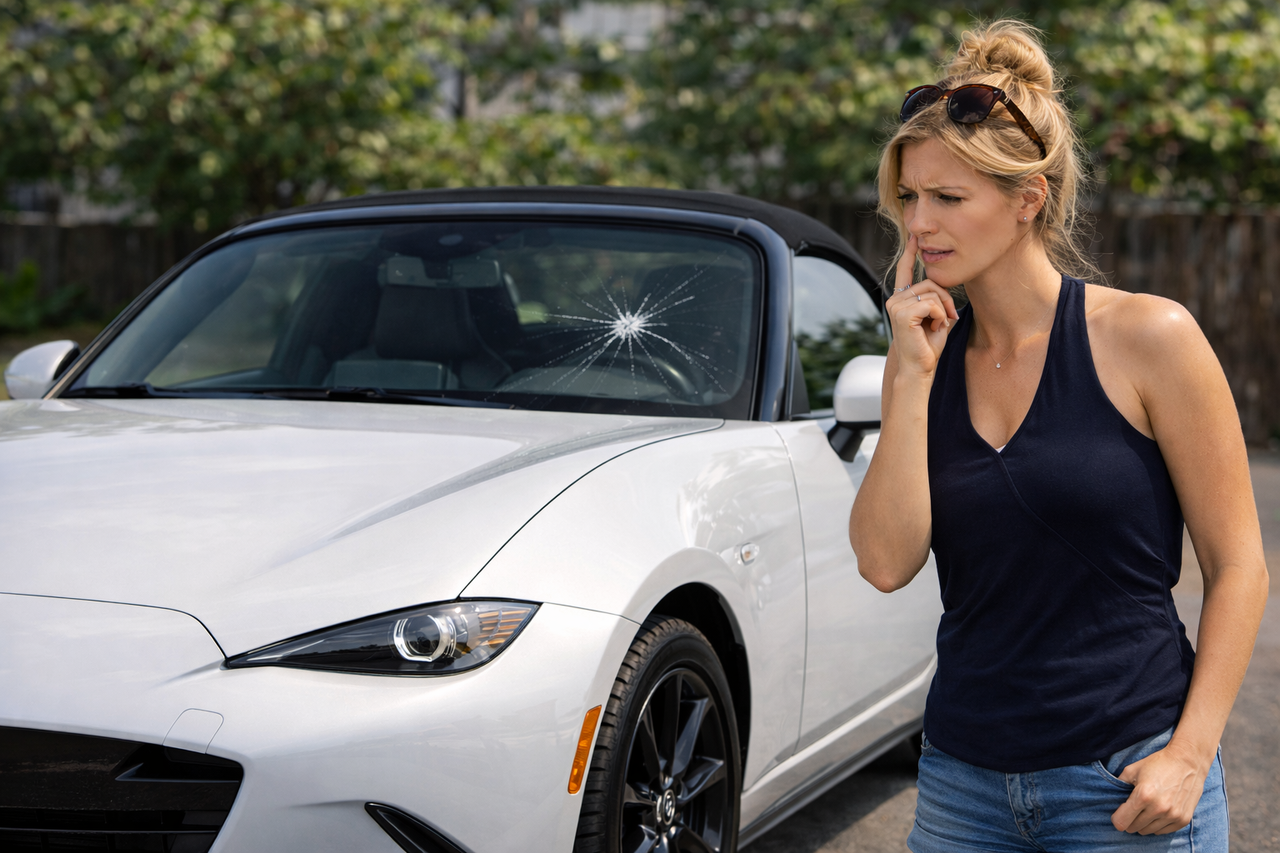
Why bring up adjacent ZIPs? Because sometimes a shop’s first answer is no for your day, but yes if they can slot you on a route in 27408 or 27405. If you’re flexible, you win. This also matters for price. I’ve seen shops sharpen a quote when they can combine your job with others nearby. If a dispatcher hears you’re open to a morning window in 27407 or an afternoon in 27410, suddenly the “earliest is next Tuesday” becomes “we can do Friday.”
You’ll see search pages and local directories stuffed with phrases like Auto Glass Shop near 27401, 27401 Auto Glass, and 27401 Windshield Replacement. Same for 27402, 27403, 27404, 27406, 27407, 27408, and farther out 27411 through 27499. Don’t get distracted by keyword soup. Use it to find contact numbers, then vet like a human.
What a fair price looks like, with caveats
For most non‑luxury vehicles without ADAS, windshield replacement in the Greensboro area often falls in the 250 to 450 dollar range for quality OEE glass. Add ADAS calibration and you might see 350 to 650, sometimes more depending on the make, the type of calibration, and whether you insist on OEM. Luxury, HUD, acoustic layers, heating elements, and embedded antennas can push it above 800. Door glass and vents are usually less, quarter glass more because of labor. Prices move with availability. A hard‑to‑source windshield for a niche trim can spike, and if the distributor in 27407 is backordered, shops might source from 27410 or 27419 at a premium.
A $199 bargain windshield usually hides something. Either the glass is bottom shelf, the molding is reused when it shouldn’t be, or calibration is conveniently “not required” even when the car’s dash lights say otherwise. On the flip side, a $1,400 bill for a common SUV with no HUD and standard camera often signals a billing machine at work. Anchor on the specifics. Ask why. A good shop will walk you through the part cost, the urethane, the trim, and the calibration line by line. If they’re prepared, they can also generate an auto glass quote 27407 that respects your schedule and your car’s options without corner‑cutting.
If you’re comparing options in other ZIPs, use the same approach. Request an auto glass quote 27401 or auto glass quote 27410 when you’re near those areas. You’ll see minor differences in labor and mobile fees, not wild swings, unless the part is scarce. For ZIPs listed across the region, this holds true: 27402, 27403, 27404, 27405, 27406, 27408, 27409, and the extended codes 27411, 27412, 27413, 27415, 27416, 27417, 27419, 27420, 27425, 27427, 27429, 27435, 27438, 27455, 27495, 27497, 27498, and 27499. The market is interconnected. The difference is who answers the phone like a pro.
How to pressure‑test a shop in five minutes
You don’t need a degree to separate the sharp crews from the sloppy ones. Three phone calls will do it. Here’s the tightest way to test them without wasting your lunch break:
- Give your VIN and ask which windshield variants your car supports. If they can’t answer, they didn’t run the VIN. Ask what calibration your vehicle needs and where they perform it. You’re listening for static, dynamic, or both, and whether they can produce a report. Ask for the urethane brand and the stated safe drive‑away time at today’s temperature. They should have this cold. Ask if new moldings or clips are required or reused. If the OE calls for new, reusing to save cost is a red flag. Ask about their warranty and whether it transfers if you sell the car. Leaks and stress cracks should be covered.
If a shop near 27407 clears that bar in a calm, confident way, you’re likely in good hands. If they fumble or dodge, keep dialing.
Timing, weather, and the cure you can’t rush
Adhesive cure times change with temperature and humidity. A tube might claim a one‑hour safe drive‑away at 73 degrees and 50 percent humidity. At 45 degrees on a damp morning, that safe time can double. Good techs know their urethane’s chart. They’ll also control the environment as much as possible. In summer, I’ve seen installers set up shade and chilled primer. In winter, they’ll warm the glass and the car interior so the bond line doesn’t fight the cold. If someone says you can drive immediately after install on a December day, you’re getting sales talk, not safety standards.
Give yourself a buffer. If your mobile appointment runs from 9 to 11, plan to drive after lunch. If you’re at a shop, bring a book or a laptop and treat it as protected windshield chip repair Greensboro time. The difference between a clean bond and a compromised one is often patience. You only get one first cure.
What a professional install looks and sounds like
Professional work is quiet. The techs speak just enough, move with purpose, and avoid quick twists that pop trim clips. They prep their tools before they touch the car. They protect surfaces, mark camera positions if needed, and use guided cutters instead of forcing blades near airbags and harnesses. The bead of urethane they lay is a consistent height, with a bead profile that matches OE specs for squeeze‑out and glass standoff. When they set the windshield, they use equal pressure on both sides and check the reveal gap before they commit. That’s why two techs often set the glass on large windshields, not because they can’t lift it, but because alignment precision is everything.
After the glass is in, they reinstall cowl panels without chewing up the retainers, remove tape at the right time, clean the glass, and run a water test if leaks were a prior issue. If calibration is required, they hook up the scan tool, run the targets or the drive cycle, save the proof, and show you the report. When they hand you the keys, the dash is clean, the glass is spotless, and you have written instructions with the safe drive‑away time. Done right, it feels uneventful. That’s the point.
Common traps and how to avoid them
One trap is accepting the wrong glass variant. If your car has a humidity sensor or a rain sensor, a plain glass won’t magically grow one. The result is warning lights or dead features. Another trap is skipping calibration because the dash light isn’t on. Some vehicles don’t flag until you need the system. Don’t let a quiet dashboard define your safety.
Watch for reused moldings when the OE calls for replacement. Certain vehicles rely on a fresh molding to lock the windshield position. Reusing a stretched or brittle piece can lead to wind noise at 40 mph that you can’t unhear. Also beware of shops that promise a 30‑minute total job including drive‑away. Maybe for a simple side glass, not for a windshield on a modern car.
Finally, don’t chase the absolute lowest number on an auto glass quote 27407 if the shop can’t articulate the details. A slightly higher quote from a shop that explains the parts, the process, and the calibration usually costs less in frustration and fixes.
Using your neighborhood to your advantage
If you live or work near 27407, you sit near a hub of routes that also serve 27401, 27406, 27409, and 27410. That means better odds of same‑week scheduling, especially if you can meet a mobile installer at work. When you call, say something like: I’m looking for 27407 Windshield Replacement with in‑house calibration and OEM options, VIN ready. I can do a morning window Tuesday or Thursday near High Point Road. That tells the dispatcher you’re prepared, flexible, and not fishing. You’ll often get a better time slot and a sharper number.
If your errands take you through 27403 or 27408, mention those too. Shops like efficient routes. On the back end, if you need to compare or expand your net, asking for an auto glass quote 27401 or an Auto Glass Shop near 27410 gives you a feel for how consistent their pricing is across nearby ZIPs. Regional consistency is a quiet sign of a stable operation.
It’s the same play if you’re on the edge of town. You’ll see listings for 27411 Auto Glass, 27412 Windshield Replacement, Auto Glass Shop near 27413, and auto glass quote 27415. Use these as waypoints. The good shops service the whole list, from 27416 to 27417 and out to 27419, 27420, 27425, 27427, 27429, 27435, 27438, 27455, 27495, 27497, 27498, and 27499. The question is whether they can prove quality, not whether they can stuff your ZIP into a headline.
A quick scenario from the field
A customer with a 2021 sedan called from 27407 after a rock strike turned into a long crack. The car had a lane camera and rain sensor. Insurance deductible was 500. The first network shop quoted OEM glass in five days with calibration offsite, total around 780 billed to insurance. The second shop offered next‑day OEE from a top manufacturer at 420 cash out the door with in‑house dynamic calibration and a printed report. We checked the OEE brand, confirmed camera compatibility, and verified the windshield part number matched the acoustic spec. The customer paid cash, saved 80 over their deductible, and drove same afternoon, with proper cure time respected. They later sold the car, and the calibration report helped reassure the buyer.
Another case involved a compact SUV in 27410 with HUD. The owner pushed hard for a 350 aftermarket option. Every installer who had seen that model’s HUD glass behave poorly on off‑brand panes tried to talk them out of it. They went cheap, then came back with ghosting in the HUD, especially at night. They ended up paying twice. Sometimes the frugal choice is the expensive one.
Final checklist before you book
Treat this as your preflight. It’s short on purpose, and it works whether you’re dialing for 27407 Auto Glass or reaching a shop across 27401 to 27455.
- Have your VIN ready and ask the shop to decode glass options, including sensors, HUD, and acoustic layers. Confirm OEM versus OEE availability, and ask which brands they trust for your model. Ask about ADAS calibration type, location, documentation, and whether it’s included in the quote. Get the urethane brand, safe drive‑away time for today’s conditions, and whether weather could delay. Clarify new moldings or clips, warranty terms for leaks and stress cracks, and any mobile service fees.
Get those answers, compare two quotes, then choose the team that sounds like they’ve done your exact job a hundred times. Because they probably have.
Where to start calling
If you prefer proximity, begin with an Auto Glass Shop near 27407 and expand outward if schedules don’t line up. Use nearby ZIPs like 27406, 27409, and 27410 for backup options. If you search by ZIP, the language will look familiar: 27407 Windshield Replacement, auto glass quote 27407, 27401 Windshield Replacement, auto glass quote 27401, and so on through 27402, 27403, 27404, 27405, 27408, 27411, 27412, 27413, 27415, 27416, 27417, 27419, 27420, 27425, 27427, 27429, 27435, 27438, 27455, 27495, 27497, 27498, and 27499. The shop that answers with confidence, details your options without hedging, and treats your time with respect is the one that will deliver.
The windshield in your car is not just a piece of glass. It’s part of the structure, a window for sensors, and the barrier between you and weather at 70 mph. Choose the shop that acts like that matters. When you do, the job feels routine, the bill makes sense, and the only thing you notice on your next drive is the quiet.